Ramayana Universe: Spin-Off Films, Video Games, VR Experiences, Theme Parks and More — Namit Malhotra’s Grand Vision
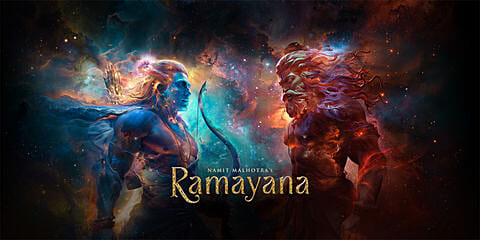
Producer Namit Malhotra has outlined an ambitious vision for expanding Ramayana beyond its two planned films, with the aim of building a vast entertainment universe inspired by one of India’s most enduring epics. The proposed expansion could include video games, spin-off films, animated projects, television shows, theme parks, merchandise, virtual reality (VR), augmented reality (AR) and even a Broadway musical.
Speaking at the Telugu pre-release event, Malhotra explained that the project was never intended to be limited to a conventional cinematic adaptation. Instead, the larger objective is to introduce audiences to the world of Ramayana through multiple forms of storytelling and entertainment.
The announcement has drawn attention to the possibility of an Indian mythology-based franchise that could reach audiences across generations and international markets. However, while the broad vision has been discussed publicly, details such as specific game titles, theme park locations, development schedules and launch dates have not yet been confirmed.
Ramayana Could Become a Cinematic Universe
Malhotra believes the significance of Ramayana extends far beyond the events that can be covered in two films. The epic contains numerous characters, interconnected stories, philosophical ideas and legendary locations that could support independent projects.
Drawing comparisons with global entertainment franchises such as Star Wars, Marvel and DC, the producer argued that Ramayana already possesses the foundations of a universe that has been part of Indian cultural life for generations.
According to him, the intention is not simply to make one or two movies and end the journey of Rama. The films could instead become the starting point for exploring different areas of engagement.
This approach could allow audiences to experience the epic through cinema, gaming, live entertainment, digital platforms and immersive technologies. It would also provide opportunities to explore characters and stories that may receive limited attention in the main films.
1. Ramayana Video Games: Bringing the Epic to Interactive Entertainment
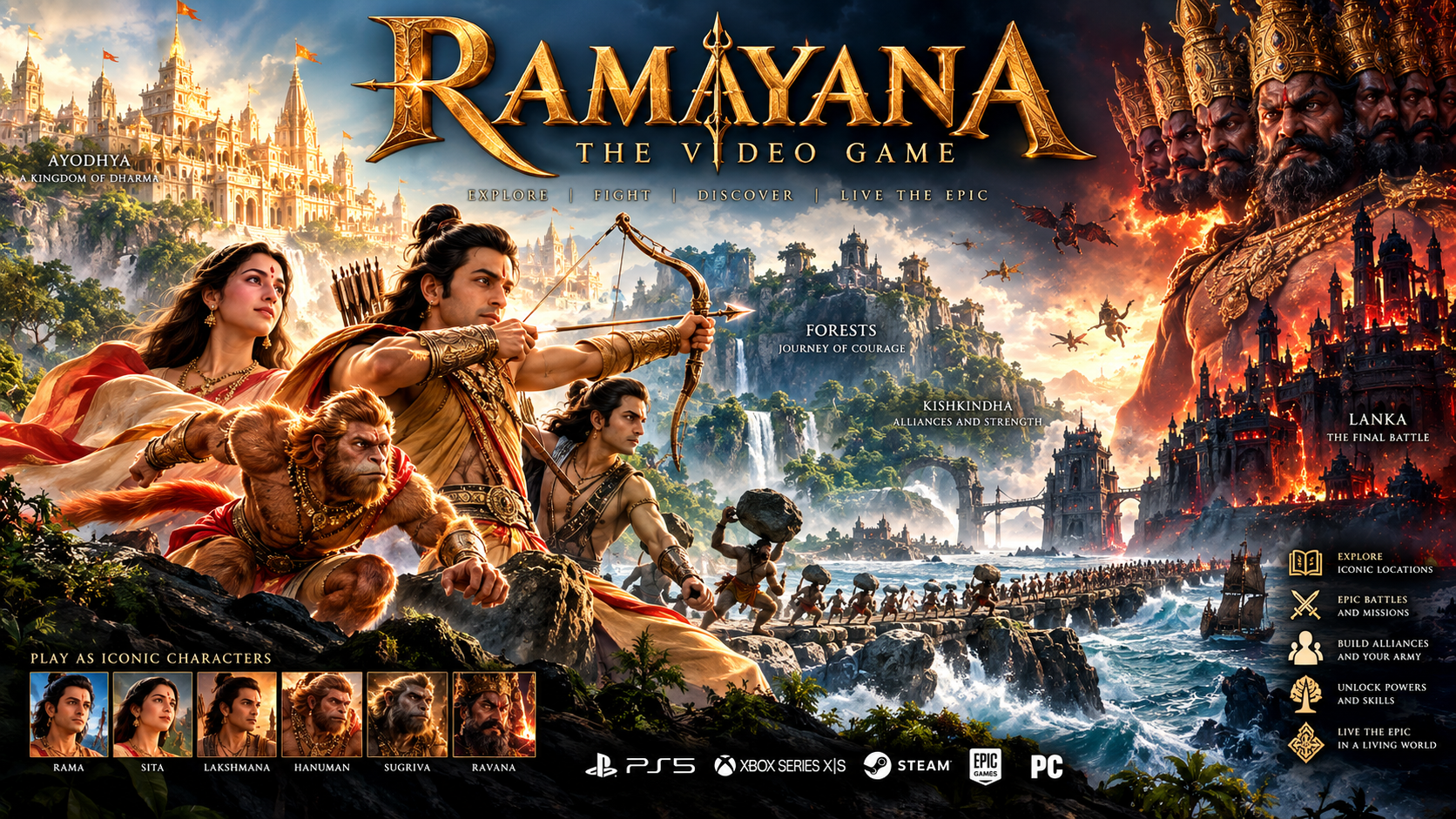
One of the most exciting possibilities is the development of video games based on the Ramayana universe. Although the producer has not announced a specific title or gameplay format, the epic's scale offers several possibilities for interactive storytelling.
An action-adventure game could allow players to explore forests, kingdoms, mountains and other locations associated with the story. Missions could be inspired by Rama's exile, the search for Sita, alliances with the vanara army and the journey towards Lanka.
A game could also feature different playable characters, each with unique abilities and storylines. For example, Hanuman-inspired missions could focus on extraordinary journeys, exploration and rescue operations, while strategy-based gameplay could revolve around preparing an army, managing resources and planning battles.
Another possibility is an open-world game in which players explore locations such as Ayodhya, Kishkindha, Dandakaranya and Lanka. Such a format could combine environmental exploration, character interactions, puzzles and story-driven missions.
A large-scale battle game could also recreate the conflict between Rama's forces and Ravana's army, using tactical gameplay and cinematic sequences.
However, these are potential game concepts rather than confirmed features. No official game title, platform, gameplay trailer or release date has been announced as part of the reported franchise plan.
2. Ramayana VR Games: Experiencing the Epic in Virtual Reality
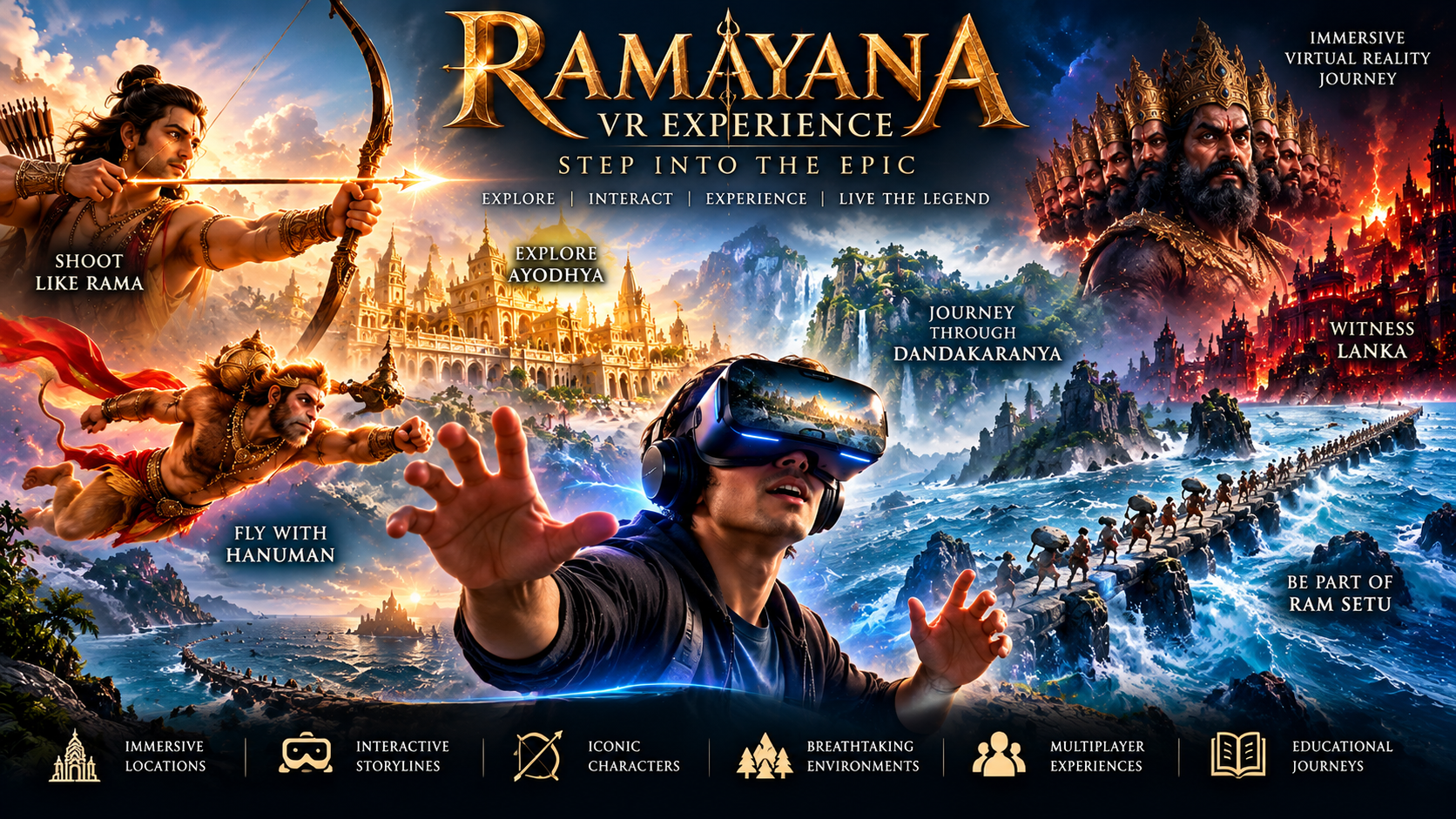
Virtual reality could offer another way to bring audiences closer to the world of Ramayana. Unlike conventional video games played on a television or computer screen, VR experiences use compatible headsets to place users inside a digitally created environment.
A potential Ramayana VR experience could allow users to explore a recreated Ayodhya, walk through a virtual palace or observe the landscapes associated with Rama's journey.
An archery simulation could let users practise virtual bow-and-arrow aiming through motion controllers. Another experience could recreate the journey towards Lanka, allowing participants to explore the environment from a first-person perspective.
A Hanuman-inspired VR adventure could focus on the journey across the ocean, while an interactive Ram Setu experience could allow participants to take part in a virtual construction challenge.
VR technology could also be used to present large-scale battle sequences, mythological environments and educational experiences for younger audiences.
These concepts could be particularly appealing in gaming centres, exhibitions, museums and future theme park attractions. Nevertheless, the announcement establishes VR as part of the broader vision; it does not confirm that a specific Ramayana VR game is already in development.
3. Ramayana Theme Parks: Entering the World of the Epic
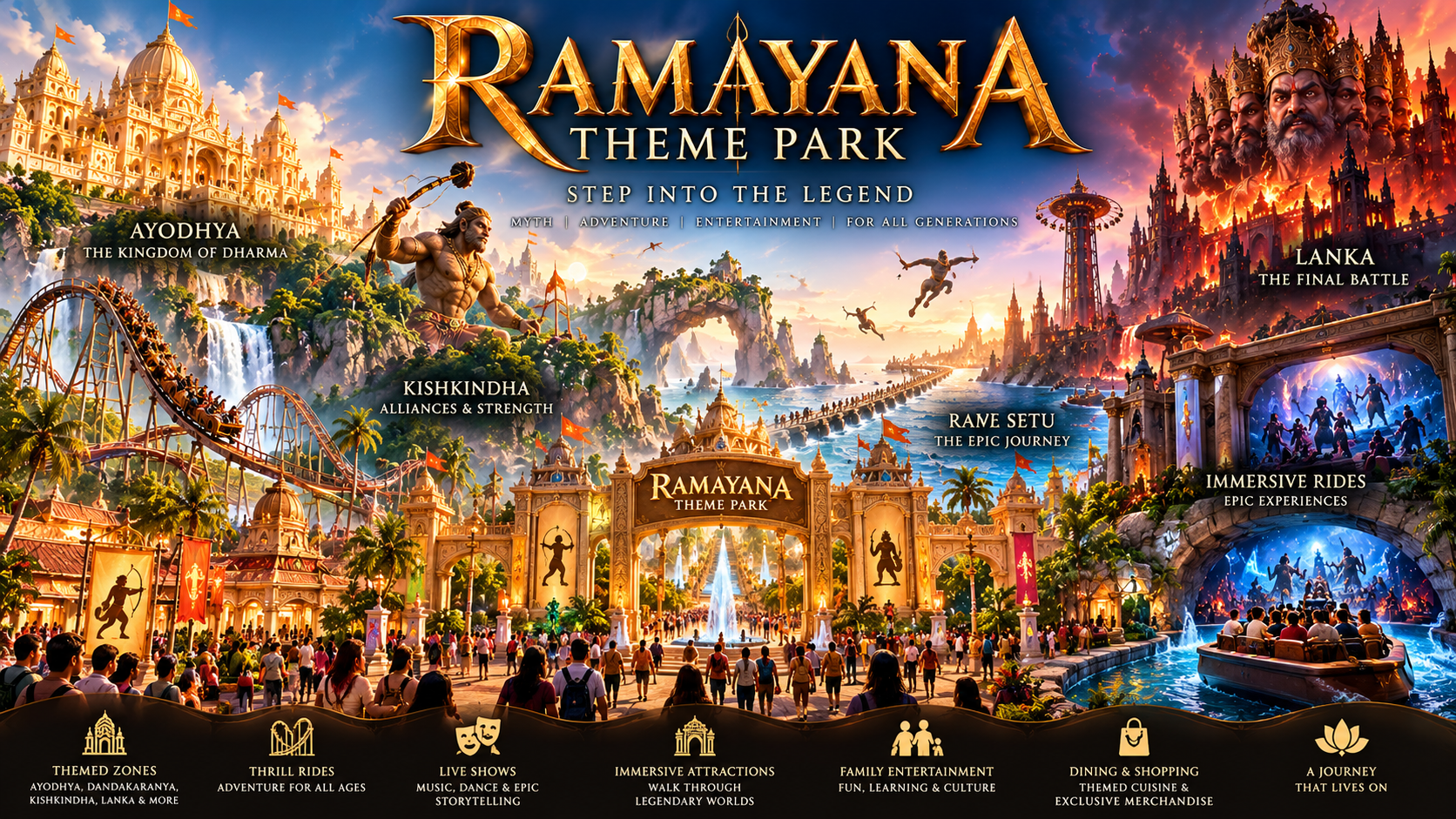
Theme parks represent another potentially significant part of the proposed expansion. A Ramayana-themed destination could combine entertainment, architecture, live performances and interactive attractions to create an experience inspired by the epic.
One possible attraction could recreate the city of Ayodhya, featuring palace-inspired structures, traditional design elements and spaces representing the kingdom's cultural atmosphere.
Visitors could also encounter immersive forest environments inspired by Rama's exile, along with attractions based on Kishkindha and the journey towards Lanka.
A Ram Setu-themed attraction could use simulated water environments, motion effects and storytelling to recreate the legendary journey. Another section could focus on Lanka, presenting its palaces, architecture and connection to Ravana's story.
Large-scale theatrical shows could recreate important episodes through performers, elaborate costumes, music, lighting and visual effects. Family-oriented attractions and educational zones could introduce younger visitors to the characters, values and philosophical themes associated with the epic.
Such a park could potentially combine traditional storytelling with modern entertainment technology.
However, no official location, construction timeline, investment figure or opening date for a Ramayana theme park has been confirmed in the announcement. The idea remains part of the larger franchise vision rather than a fully detailed public development plan.
4. Spin-Off Films: Exploring the Stories Behind Iconic Characters
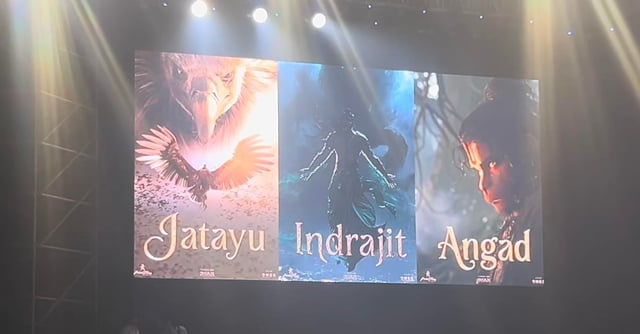
Spin-offs could allow the franchise to explore individual characters and events beyond the central narrative of the two main films.
The Ramayana contains numerous characters whose histories, motivations and experiences could support independent storytelling. Separate films or series could examine their backgrounds while remaining connected to the larger universe.
Hanuman is one character whose story could support a standalone project. A film could explore his childhood, extraordinary abilities, devotion to Rama, journey to Lanka and role in the events leading to the final battle.
Jatayu could also provide the foundation for an emotional story centred on courage, duty and sacrifice. His attempt to protect Sita from Ravana is one of the epic's memorable episodes and could be explored through a focused narrative.
Surpanakha is another character whose role could be examined in greater depth, depending on the creative direction chosen by the filmmakers. Her story could explore the events that contribute to the conflict between Rama and Ravana.
Other possible subjects include the history of Kishkindha, the relationship between Vali and Sugriva, and the journeys of characters whose stories intersect with the central epic.
The franchise could also expand through animated films, television series and origin stories designed for different audiences.
While the producer has discussed spin-offs and other formats, individual projects should not be considered confirmed films unless their development is officially announced.
5. Augmented Reality: Bringing Ramayana Into the Real World
Augmented reality, commonly known as AR, could offer audiences an interactive way to engage with characters and locations using smartphones or compatible devices.
Unlike virtual reality, which creates a largely digital environment, AR adds digital elements to the real world through a device's camera or display.
For example, a future Ramayana application could allow users to view three-dimensional character models in their surroundings. Scanning an illustrated book or promotional poster could trigger animated scenes, character introductions or additional information about the story.
Museums and exhibitions could use AR to present digital reconstructions of mythological locations. Visitors might scan an exhibit to discover interactive models, architectural details or explanations of important episodes.
AR could also be incorporated into educational products, collectible merchandise and promotional campaigns associated with the films.
These possibilities could make the epic more accessible to younger, technology-oriented audiences. However, no specific AR application or product has been officially detailed in the reported announcement.
6. Metaverse Experiences: A Shared Digital Ramayana Universe
The proposed expansion also includes metaverse experiences, a concept associated with shared digital environments in which users can interact through virtual representations of themselves.
A future Ramayana-inspired digital world could allow participants to explore virtual locations, attend online exhibitions or take part in interactive storytelling experiences.
For example, users might visit a digitally recreated Ayodhya, explore a virtual exhibition about the characters or participate in educational activities inspired by the epic.
Shared virtual events and digital performances could provide additional ways for international audiences to engage with the franchise without travelling to a physical location.
The actual scope of any such experience would depend on the technology, platform and creative decisions made by the developers. At present, the announcement does not specify a particular metaverse platform or launch schedule.
7. Merchandise, Toys and Collectibles
Merchandise could provide another major avenue for expanding the franchise. The announced vision includes products spanning apparel, toys, gadgets and home furnishings.
Potential offerings could include character figurines, collectible statues, clothing, accessories, illustrated books and decorative products inspired by the films.
The franchise could also explore educational merchandise aimed at children, including illustrated storytelling products and character-based collectibles.
If developed across multiple markets, such products could help audiences maintain a connection with the franchise between film releases.
However, specific product ranges, retail partnerships, prices and availability dates have not been confirmed.
8. Broadway Musical and Live Entertainment
A Broadway-style musical could introduce Ramayana to theatre audiences through live performances, music, choreography and elaborate stage production.
The epic's dramatic moments, emotional relationships and larger-than-life settings offer material that could be adapted for the stage.
A production could focus on Rama's exile, Sita's abduction, Hanuman's journey to Lanka and the confrontation between Rama and Ravana. Music and stage design could play a central role in communicating the story to international audiences.
Live entertainment could also extend to special performances and theatrical productions associated with future theme park experiences.
The inclusion of a Broadway musical in the broader vision indicates an interest in formats beyond cinema. Details regarding the production team, cast, venue and performance dates, however, remain unannounced.
9. A Major Creative Collaboration Behind the Films
The first two Ramayana films are directed by Nitesh Tiwari, known for Dangal and Chhichhore.
Ranbir Kapoor portrays Rama, Sai Pallavi plays Sita, and Yash appears as Ravana. Yash is also a co-producer through his banner, Monster Mind Creations. Sunny Deol plays Hanuman, while Ravi Dubey portrays Lakshman. The supporting cast includes Kajal Aggarwal as Mandodari and Arun Govil as King Dashrath. Govil is widely remembered for playing Rama in Ramanand Sagar's iconic 1987 television adaptation of Ramayan.
The music brings together A. R. Rahman and Hans Zimmer, creating a high-profile collaboration between Indian and international composers.
The screenplay by Shridhar Raghavan and Nitesh Tiwari draws on the ancient epic attributed to Valmiki.
The first instalment is scheduled for worldwide release on November 5, 2026, with the second part planned for Diwali 2027.
Conclusion: An Ambitious Vision for Indian Mythology
Namit Malhotra's vision positions Ramayana as a potential long-term entertainment franchise rather than a story confined to two films. Video games, VR experiences, theme parks, spin-offs, animation, merchandise and live theatre could each offer different ways to engage with the epic.
The central opportunity lies in combining modern technology with a story that has been passed down through generations. If the proposed initiatives move forward, audiences could eventually encounter Ramayana across cinemas, gaming platforms, physical attractions and digital environments.
For now, the distinction between the announced vision and projects that have entered production remains important. The scale of the ambition is clear, but the success of the larger universe will depend on how these ideas are developed, funded and brought to audiences.
The two main films are the immediate focus. Whether the wider plans evolve into a fully realised entertainment universe will become clearer as the makers announce concrete projects, partnerships and release schedules.
What did this spark?