Drishyam 3: Hindi vs. Malayalam — Which Version Delivered the Ultimate Climax?
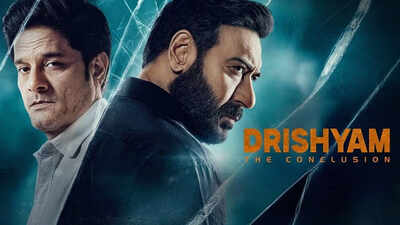
The Drishyam franchise has established itself as one of Indian cinema’s most celebrated suspense-thriller series. What began as a gripping Malayalam story eventually crossed linguistic boundaries and captivated audiences across the country.
Over the years, the franchise has been adapted into several Indian languages, but one debate continues to dominate among fans: Which version of Drishyam stands superior—the original Malayalam series featuring Mohanlal as Georgekutty, or the hugely successful Hindi adaptation starring Ajay Devgn as Vijay Salgaonkar?
Both versions bring their own strengths to the table. While Mohanlal’s portrayal of Georgekutty is praised for its subtlety and emotional depth, Ajay Devgn’s Vijay Salgaonkar has become equally memorable for his calm, calculated, and determined performance.
Despite following the same core premise, the two films offer slightly different cinematic experiences, making the Drishyam franchise a fascinating case study in how one story can leave a distinct impact across languages and audiences.
With both franchises now reaching their highly anticipated third installments, one question has become impossible to ignore: Did the Hindi version of Drishyam 3 follow the Malayalam film’s storyline almost frame by frame, or did it take a different route and create an ending of its own?
The comparison goes beyond simply matching scenes and story beats. From major plot developments and character arcs to performances and the way the final chapter unfolds, there are several similarities as well as notable differences worth exploring.
In this detailed breakdown, we’ll look at how the two Drishyam 3 films compare, where their storylines begin to diverge, how the performances shape each version, and ultimately, what makes each franchise’s conclusion stand out in its own way.
1. The Foundation: Recapping Parts 1 & 2
Before exploring the third chapters of both franchises, it’s important to look back at the first two films and understand just how closely their stories followed the same path.
From the central premise and key twists to the characters’ motivations and carefully constructed cover-ups, both versions remained remarkably similar in their storytelling. However, each adaptation brought its own tone, performances, and cinematic touches to the narrative.
Understanding these similarities provides the perfect foundation for examining where the two franchises eventually begin to take different directions in their respective third installments.
Drishyam 1
In both versions of Drishyam, the story revolves around an ordinary family man whose seemingly peaceful life is thrown into chaos after a tragic incident involving an influential police officer’s son.
When the young man attempts to blackmail the protagonist’s daughter and dies accidentally at their home, the family is suddenly faced with the terrifying possibility of losing everything. What follows is a tense battle of wits between the family and the police.
Both Georgekutty and Vijay use their intelligence and meticulous planning to construct an elaborate cover story, creating a carefully crafted alibi designed to keep the authorities from uncovering the truth. Even as the police turn up the pressure and subject the family to intense interrogation, both protagonists remain determined to protect their loved ones at any cost.
The film’s biggest strength lies in this psychological cat-and-mouse game, where every small detail from fabricated timelines to seemingly ordinary family outings becomes a crucial part of the larger deception.
Drishyam 2
The second installment raised the stakes considerably in both versions, while once again keeping the core storyline remarkably similar.
As the police reopened the case, undercover officers were sent to monitor the protagonist’s family, even going as far as bugging their home in an attempt to uncover a confession. Meanwhile, a thief who had been involved in the original events became an unexpected witness to the body’s disposal beneath the site where the new police station was being constructed.
Even when the investigation finally appeared to reach its breakthrough and the skeleton was exhumed, Georgekutty and Vijay remained one step ahead. Through a carefully planned switch involving the forensic remains, along with the help of a mortuary or evidence-room watchman and a gravedigger, they managed to keep the authorities from establishing the truth beyond doubt.
However, beneath these similar plot developments, an important difference between the two protagonists had already begun to emerge.
In the Malayalam version, Mohanlal’s Georgekutty had transformed his fortunes and was now financially successful, even owning a cinema theatre. Ajay Devgn’s Vijay, on the other hand, remained focused on turning his lifelong passion for cinema into reality, struggling to secure financing for the film he dreamed of making.
This subtle difference in their personal journeys would eventually become significant as both stories moved toward their respective third chapters.
2. Malayalam Drishyam 3: The Dark Moral Realism
The Malayalam version takes the story in a darker and more psychologically intense direction, focusing less on the thrill of the crime and more on the emotional consequences that continue to haunt Georgekutty and his family.
The Lingering Trauma
Georgekutty has now achieved the success he once dreamed of. He has become a wealthy film producer, and his movie—ironically centered on a man confessing to murder—turns into a major box-office success.
Yet, behind the success and financial security, Georgekutty’s family continues to struggle with the consequences of their past.
His elder daughter is deeply affected by the trauma of the events surrounding the murder. She suffers from severe PTSD and epileptic episodes, while the family’s troubled history begins to affect her personal life as well. Potential marriage proposals fall apart after prospective families learn about the controversy surrounding the family.
This creates a much darker emotional conflict for Georgekutty. Despite successfully protecting his family from the law, he cannot completely protect them from the psychological scars left behind by what happened.
The story therefore shifts its focus from simply asking “Will Georgekutty get caught?” to a far more uncomfortable question: Can a family ever truly escape the consequences of the secret it has spent years protecting?
The Hunt Reopens
While Georgekutty and his family try to move forward, Sam’s parents remain devastated by their son’s disappearance. Living far from home, they continue to carry the grief of losing him. His mother is left bedridden and severely incapacitated, while his father refuses to accept that the case should remain closed.
Driven by grief and a desire for revenge, Sam’s father returns and begins pushing the local authorities to reopen the investigation. The case that Georgekutty thought he had buried for good once again threatens to expose the family’s carefully protected secret.
The Downfall
The renewed investigation also brings an old enemy back into the picture. A disgraced and bitter former inspector, now struggling with alcoholism and operating outside official channels, becomes determined to uncover the truth.
He begins tracking down the people connected to Georgekutty’s original plan, including the gravedigger and the evidence-room watchman who helped keep the authorities from discovering the truth.
As the pressure intensifies, Georgekutty finds himself facing a trap that could destroy everything he has built. In his desperate attempt to protect his family, however, his decisions begin crossing increasingly dangerous moral boundaries.
What makes this chapter particularly tragic is that Georgekutty’s actions eventually have consequences within his own family, inadvertently causing harm to the very daughter he has spent years trying to protect.
The story thus transforms Georgekutty from a clever family man outsmarting the system into a deeply conflicted character forced to confront the devastating cost of his choices.
The Ending
The story reaches its emotional peak when Georgekutty finally realizes the devastating truth: in his relentless effort to protect his family and preserve their secret, he has gradually become a source of danger to the very people he was trying to save.
Unable to live with the consequences of his choices, Georgekutty makes the ultimate decision. He writes down a confession accepting responsibility and surrenders himself to the police, bringing his long-running battle with the authorities to a dramatic turning point.
However, the story does not provide a completely definitive conclusion. The ending deliberately leaves certain questions unanswered, creating an ambiguous final note and keeping the possibility of another chapter alive.
Rather than offering a neat resolution, the film closes with Georgekutty facing the consequences of his actions while leaving audiences to wonder whether his story has truly reached its end or whether there is still another chapter waiting to unfold.
3. Hindi Drishyam 3: The High-Stakes Legal Chess Game
While many viewers expected Ajay Devgn’s Drishyam 3 to closely mirror the Malayalam storyline, the Hindi installment takes a noticeably different route. Instead of simply recreating the events of the original, it introduces new conflicts, fresh characters, and a more elaborate legal battle.
A New Antagonist
After two unsuccessful attempts to bring Vijay Salgaonkar and his family to justice, IG Meera Deshmukh remains haunted by the unresolved case. Unable to accept that the truth may remain buried forever, she continues searching for a way to reopen the investigation.
The case eventually comes under the supervision of a new and determined police officer, SP Tomar, portrayed by Jaideep Ahlawat. Unlike the previous investigations, Tomar approaches the case with a fresh perspective and begins examining details that had previously been overlooked.
His breakthrough comes from the crime scene itself. Investigators discover microscopic traces of DNA inside the pit at the police station, raising serious questions about the remains that had previously been presented as evidence.
The discovery suggests that the forensic remains stored in the evidence locker do not belong to Sam at all—giving the investigation a potentially explosive new lead.
With this revelation, Vijay’s carefully constructed defense begins to face its most serious challenge yet. The battle is no longer simply about uncovering the missing body; it becomes a high-stakes game of evidence, strategy, and legal maneuvering, with both sides desperately trying to stay one step ahead.
Systemic Pressure
As SP Tomar digs deeper into the case, the investigation begins closing in on the people who once helped Vijay keep his secret. The police track down the gravedigger and the evidence-room watchman, turning two crucial former accomplices into potential witnesses against him.
With their statements threatening to expose the carefully constructed cover-up, Vijay finds himself facing pressure from multiple directions. The investigation is no longer limited to physical evidence; the people involved in his original plan are now becoming liabilities.
The pressure also begins to spill into the Salgaonkar family’s personal lives. When Anju receives a promising marriage proposal, what should have been a moment of happiness quickly becomes another battlefield.
SP Tomar intervenes and attempts to sabotage the potential marriage, using the family’s troubled past as a weapon. His actions make it clear that the investigation is no longer confined to the courtroom or police station the consequences are now reaching directly into Vijay’s family life.
The High Court Battle
With the investigation reaching a critical stage, Meera Deshmukh takes the fight to the High Court, bringing in an elite senior advocate to strengthen the prosecution’s case against Vijay.
The prosecution builds its argument around the missing remains. Its claim is straightforward: if the church grave does not contain the transplanted bones that were supposed to replace the original evidence, Vijay’s carefully constructed story could collapse, leaving him directly exposed.
But the prosecution has another potentially damaging piece of evidence. Investigators bring forward covert wiretaps from the earlier investigation, focusing on the night of the 23rd.
According to the prosecution, Vijay was seen drinking with the evidence-room watchman that night. Yet, at roughly the same time, a recording captured Vijay’s voice inside his own home.
The apparent contradiction creates a major question: How could Vijay have been in two places at once?
As the courtroom battle intensifies, the case turns into a complex puzzle of timelines, recordings, physical evidence, and carefully constructed deception.
The Climax: The Ultimate Misdirection
With the evidence seemingly closing in around him, Vijay must once again rely on the one weapon that has protected his family from the beginning—his ability to stay several steps ahead of the investigation.
What follows is the film’s biggest game of misdirection, where appearances, evidence, and even seemingly definitive proof may not be what they initially appear to be.
The Ultimate Misdirection
The film builds the climax through a tense cross-cutting sequence that keeps the audience focused on two unfolding battles at once.
On one side, excavation officers begin digging into the consecrated church graveyard, even as local residents gather to protest the operation. On the other, the courtroom grows increasingly tense as the prosecution plays incriminating audio recordings, seemingly tightening the case against Vijay.
With the investigation closing in from every direction, Vijay finally unveils his biggest masterstroke.
The Skeleton
The key to Vijay’s defense lies in his unfinished film project. Using his knowledge of filmmaking, he had instructed an art director to create an anatomically accurate synthetic skeleton.
The replica was then secretly buried in the cemetery, setting up an elaborate deception that could potentially mislead the investigators once the grave was opened.
What initially appears to be the final piece of evidence against Vijay therefore becomes another layer of his meticulously constructed plan. The sequence perfectly captures the essence of Drishyam: when the truth seems moments away from being uncovered, Vijay has already prepared another illusion to keep the real secret buried.
The Wiretap
Vijay’s final deception is built around the surveillance he had anticipated years earlier. Suspecting that the undercover neighbors were secretly monitoring his family, he deliberately created false audio recordings using tape recorders and fed them into the surveillance system.
The recordings were designed to establish a second, seemingly airtight alibi—one that would later make the prosecution’s own evidence work against them.
Once the truth behind the recordings comes to light, the investigation’s strongest pieces of evidence begin to collapse. Vijay’s carefully layered plan once again keeps his family out of legal danger.
In the end, Vijay walks away victorious, securing another crucial victory in his long-running battle to protect his family.
4. Comparing Mohanlal vs. Ajay Devgn: The Acting Craft
At the heart of both Drishyam franchises are two powerful performances. Mohanlal and Ajay Devgn bring immense star presence to Georgekutty and Vijay Salgaonkar, but their interpretations take noticeably different approaches.
While both actors portray men driven by an almost unbreakable determination to protect their families, the emotional texture, body language, and intensity of their performances give the two characters distinct identities.
The real comparison, therefore, is not simply about who delivers the bigger performance. It is about how each actor communicates fear, guilt, calculation, and desperation without losing the core of a father determined to protect his family.
Mohanlal’s Masterclass
Mohanlal’s portrayal of Georgekutty is built on layers of subtle emotion rather than overt theatrics. From the very beginning, he creates a character whose intelligence, fear, guilt, and determination exist beneath an outwardly ordinary exterior.
His performance becomes particularly powerful in the quieter moments, where Georgekutty is forced to process danger without allowing his family to notice anything is wrong.
One of the most memorable examples comes in Drishyam 2, when a villager confronts Georgekutty near his car while his family remains completely unaware of what is happening behind him. The scene requires Mohanlal to communicate several conflicting emotions almost simultaneously.
There is the initial shock of being confronted, the fear of potentially being exposed, the rapid calculation of his next move, and finally the deliberate return to a composed exterior. Mohanlal conveys all of this through subtle changes in his expression and body language rather than relying on dramatic dialogue.
That ability to let the audience see what Georgekutty is thinking while keeping the character’s outward behavior controlled is one of the defining strengths of Mohanlal’s performance. His Georgekutty feels less like a conventional thriller protagonist and more like a deeply human man constantly battling the consequences of his own decisions.
Ajay Devgn’s Screen Presence
Ajay Devgn brings a different energy to Vijay Salgaonkar. His performance is defined by restraint, controlled intensity, and a quiet determination that rarely needs to be expressed through dramatic outbursts.
While the character naturally carries some of the stylistic foundation established by Mohanlal’s Georgekutty, Devgn gives Vijay his own identity. His portrayal emphasizes unwavering resolve and a fiercely protective paternal instinct, particularly when his family comes under pressure.
Devgn’s controlled body language and stoic expressions make Vijay appear like a man who has already accepted the risks involved in protecting his loved ones. Even when the investigation seems to be closing in, he rarely allows panic to surface.
That consistency becomes one of the performance’s biggest strengths. Rather than portraying Vijay as an emotional hero, Devgn presents him as a determined family man who responds to every new threat with calculation and defiance.
As a result, the Hindi adaptation gives audiences a protagonist who is easy to root for throughout the increasingly complicated ordeal, while still retaining the morally grey edge that makes Vijay such an intriguing character.
The Final Verdict
At the end of the day, the two versions of Drishyam 3 take remarkably different approaches to bringing their respective stories to a close.
Jeethu Joseph’s Malayalam version chooses a darker and more introspective path, focusing heavily on guilt, trauma, and the moral consequences of Georgekutty’s years of deception. His decision to surrender gives the story a somber emotional weight, but for viewers who have followed Georgekutty’s journey across three films, his imprisonment can feel like a deliberately painful departure from the franchise’s traditional cat-and-mouse formula.
The Hindi version, directed by Abhishek Pathak, takes a more commercially driven approach. Instead of following the Malayalam storyline, it builds an independent narrative around Vijay, introduces new obstacles and adversaries, and turns the climax into another elaborate battle of strategy and deception.
The film’s final twists are designed to deliver the kind of payoff that Drishyam audiences have come to expect—where seemingly conclusive evidence is revealed to be another layer of Vijay’s master plan.
Ultimately, the two films offer two very different interpretations of how Vijay and Georgekutty’s stories should end. The Malayalam film leans toward moral reckoning and emotional consequence, while the Hindi adaptation prioritizes suspense, courtroom drama, deception, and a more crowd-pleasing payoff.
For viewers who prefer a darker, character-driven conclusion, the Malayalam ending may leave a stronger emotional impact. Those looking for another intricate game of wits and a more conventional thriller payoff may find the Hindi finale more satisfying.
Rather than simply being two versions of the same ending, Drishyam 3 demonstrates how the same franchise can arrive at dramatically different conclusions while retaining its central question: How far can a man go to protect his family—and what happens when the consequences finally catch up with him?
What did this spark?